AI – The Secret Author: Would You Want to Know?

Your favourite magazine – whether it is Vogue, National Geographic or another trusted publication – may already contain AI-generated content without notifying you. As Artificial Intelligence becomes embedded in newsrooms, an important question emerges: should readers have a right to know?

81% of publishers now use Artificial Intelligence for production or in editorial and almost 1 in every 5 publishers use Artificial Intelligence to assist with personalisation in their published content (1). Artificial Intelligence has become a common feature in modern publishing ranging from assistance with spell checks to generating whole pages of content. Therefore, would this revelation impact your trust with that magazine, or would it make little difference?

As we continue to read and spread information drawn from published content, the impact of Artificial Intelligence in this area cannot be understated. The ongoing issue of hallucinations in AI-generated content poses a threat to journalistic integrity and requires keen oversight by journalists to prevent the spread of false information.

The Role of AI

Artificial Intelligence can be used to assist journalists with their first drafts, generate snappy headlines, grammar check their work, find key takeaways, create images and personalise content. Applications are also adopting Artificial Intelligence such as BBC iPlayer: “The evolution of AI in all its forms offers tremendous opportunities for creativity, innovation and improved productivity in every area of the BBC” (3). While concern grows for the future of jobs in journalism, Artificial Intelligence may only play a minor role in assisting journalists to produce higher quality work in a more efficient fashion.

Benefits of AI in Journalism

There are numerous benefits to using Artificial Intelligence in journalism, such as a faster production rate, cost-effectiveness, and the ability for journalists to stay on top of active stories. However, 62% of UK journalists view Artificial Intelligence as a large threat to the future of journalism (4).

On the other hand, Vogue’s August 2025 issue has caused severe backlash and criticism due to a discreet label stating, “Produced by Seraphinne Vallora on AI.” The use of Artificial Intelligence in such a long-standing and esteemed publication has caused an “outrage” (2) amongst readers, with many “long time subscribers announcing cancellations” (2). The most prominent reason for this extreme backlash is the desire for authenticity.

The negativity following Vogue’s use of Artificial Intelligence is an example of why publications are more likely to shy away from publishing AI-generated content. Even with the potential of backlash, should we expect publishers to notify their readers whenever Artificial Intelligence has been used within their publications?

Transparency

Journalism relies on journalistic integrity as a foundation to keep audiences engaged. Disclosing when Artificial Intelligence has been used helps avoid deception and enables readers to research and assess the credibility of content. As Warren Buffett noted, “It takes 20 years to build a reputation and 5 minutes to ruin it” (5); therefore, disclosure may be a necessary step to preserve a publication’s reputation.

However, should we require transparency where Artificial Intelligence has been used merely as an editing tool? Grammarly, Photoshop and other known editing tools do not require a label to expose usage - should Artificial Intelligence require such disclosure?

Legal Complications

The Law is yet to catch up with the rapid development of Artificial Intelligence in journalism, creating further legal complications:

  • European Union Artificial Intelligence Act 2024 - Article 50 “Deployers of an AI system that generates or manipulates text which is published with the purpose of informing the public on matters of public interest shall disclose that the text has been artificially generated or manipulated.” (6). Under the new legislation, it is mandatory to label AI-generated content such as deepfakes; however, the disclosure of AI being used as an editing tool or for general writing assistance is not mandated under this Act.

  • Copyrights, Designs and Patent Act 1988 – Section 9(3) states that “In the case of a literary, dramatic, musical or artistic work which is computer-generated, the author shall be taken to be the person by whom the arrangements necessary for the creation of the work are undertaken” (7). However, the increasing sophistication of generative AI has prompted debate about whether this provision remains appropriate. How can we really give journalists full praise for authorship of “their” work if it was mostly computer-generated?

It is unlikely that Artificial Intelligence will disappear from journalism, especially for simple editing purposes. However, the need for clear and transparent labelling may be the key step in ensuring readers can continue to place trust in publications and potentially prevent some of the backlash seen with Vogue. If the core of journalism is trust and integrity, disclosure of AI-generated content should be seen as a necessity, and not just a source of anxiety for journalists.

Hamsini Bacchu, August 2026

1: https://presenc.ai/research/ai-in-media-and-publishing-statistics-2026

2: https://www.forbes.com/sites/moinroberts-islam/2025/07/29/vogue-erupts-ai-generated-models-spark-reader-fury-and-industry-panic/

3: https://www.bbc.co.uk/editorialguidelines/guidance/use-of-artificial-intelligence#editorialissuesintheuseofai

4: https://reutersinstitute.politics.ox.ac.uk/news/speed-hoaxes-and-mistrust-how-ai-transforming-freelance-journalism

5: https://www.forbes.com/sites/erikaandersen/2013/12/02/23-quotes-from-warren-buffett-on-life-and-generosity/

6: https://artificialintelligenceact.eu/article/50/

7: https://www.legislation.gov.uk/ukpga/1988/48/section/9

Behind the Scenes: the AI Revolution in Film & TV

Imagine writing a script and seeing it storyboarded by a computer in seconds, or watching it create an animation instantly; it is the modern reality of filmmaking today. Artificial intelligence is no longer just a futuristic, sci-fi device – it is actively reshaping our lives as we speak. This includes the making of our favourite films and TV shows. But as technology continues its rapid growth, the industry faces a critical question: will AI make or break the soul of cinema?

AI is already being deployed in some areas of the film and TV production process, including the conceptualisation of new ideas, storyboarding, and visualisation. One may argue that utilising advanced technology such as AI is rather beneficial to the filmmaking industry, reducing time and human labour whilst producing first drafts and pre-production results. However, studies have shown that uncertainty arises when considering the extent of AI and how it will change production, extending to how those changes manifest throughout the content and distribution ecosystem. As a result, industry leaders face the potential threat of AI materially altering the industry’s structure and profit pools.

McKinsey & Company’s Alec Wrubel provided an insight into the perceived benefits of AI usage (1). It is commonly believed that with the assistance of AI and similar tools, better quality results are produced at an accelerated rate and lower cost. Wrubel draws on the film Star Wars: A New Hope, in the 1970s, in comparison to The Rise of Skywalker (2019) to challenge this assumption. He states that whilst the introduction of CGI resulted in increased visual fidelity, they did not reduce the overall cost of filmmaking. Instead, studios often reinvest these technological efficiencies into creating more visually ambitious films. As a result, rather than replacing expenditure, incorporating technology like AI can be argued to enhance creative output rather than simply reducing production costs. Then, how useful is AI, really? Do the benefits outweigh the flaws?

AI’s continuous advancements result in its increased accessibility, extending far beyond its presence in the filmmaking industry. The prevalence of AI can also be seen in open platforms like YouTube and TikTok, where a variety of AI-generated content is viewed every day. This is where deeper issues can potentially arise, conflicting with legal aspects such as intellectual property (IP), liability, and consent. From a critical perspective, AI can be perceived as a “threat”, when considering deepfakes and AI-generated performers being able to replicate micro-expressions and vocal nuances effortlessly, without human involvement (2). Applications such as CapCut are widely available to the public, granting them access to the effortless creation of AI-generated videos. In comparison to those in the filmmaking industry, a sense of professionalism and legality is lost in the production process. As a result, it remains ambiguous who is liable when legal conflict arises.

That said, it is not wrong to address the extent of creativity AI can provide. As Jamie Vickers claims, “almost every major technological innovation in media has produced a format that nobody envisioned”. Essentially, even TV itself is a major new art form that we all have grown to love. Then there was the introduction of social media platforms, such as Instagram, allowing for free, creative self-expression. From this perspective, it is arguable that AI isn’t a replica of human creativity; it is a tool that can expand authentic human creativity and increase the value of content creation and storytelling. Considering this view, it is crucial to note the importance of balance. The use of AI poses as many benefits as it does threats; the key is to utilise it sparingly, avoiding ethical misuse (3).

One of the major concerns regarding AI is its impact on employment in the film and TV industry. Writers, actors, animators, editors and visual effects artists have all questioned whether AI could eventually replace aspects of their career. While AI has the potential of completing repetitive tasks successfully, many creatives argue that the storytelling of films is predominantly reliant on unique human experience – qualities that AI cannot replicate. Rather than replacing filmmakers, AI can be used collaboratively. Efficiency can improve in initial processes like generating first drafts and ideas, whilst simultaneously retaining authentic human creation. Therefore, the success of AI in the industry is largely dependent on humans’ responsibility towards using advanced technology and its implementation.

Ultimately, AI is neither the saviour nor the downfall of film and television. It offers significant opportunities to improve filmmaking processes, inspire creativity, and make production more accessible. However, it can also present ethical and legal challenges surrounding issues such as consent, authenticity, intellectual property, and liability. As AI continues to evolve, it is inevitable that it will become deeper embedded into our lives. The future of cinema will rely on maintaining a healthy balance between technological innovation and human creativity. If used ethically and with appropriate regulation, AI has the potential to enhance the future of filmmaking without replacing the people whose unique imagination gives cinema its soul.

Crystal Kan, July 2026

1: https://www.mckinsey.com/featured-insights/mckinsey-explainers/lights-camera-algorithm-how-ai-is-rewriting-the-rules-of-film-and-tv

2: https://ipwatchdog.com/2025/04/21/ai-ip-hollywood-finding-balance-verge-new-creative-class/

3: https://medium.com/@jeetpadhya35/ai-is-a-tool-not-a-replacement-how-artificial-intelligence-amplifies-human-capability-7a798ba864d2

Music Copyright and AI: What Can We Learn from the Amen Break?

It is highly likely that in the past half decade, you have unknowingly listened to music made partially, even entirely, by AI. Whether it’s a producer using AI instruments and vocals (1) or completely AI-generated artists (2), music is rapidly beginning to include more sounds created on AI driven software.

With listeners expressing their concerns when it comes to identifying AI usage in their music, a similar issue emerges regarding copyright. For example, in what way is using recordings to train music-generating models copyright infringement? Or how should the use of such software be made clear as well as credited? However, what if these seemingly modern concerns didn’t emerge as recently as one would’ve thought.

Going back 70 years to 1956, long before any Zoomer used ChatGPT on an iPad, chemistry professor Lejaren Hiller was busy tinkering with the Illiac I, the University of Illinois Urbana-Champaign’s only computer at the time. Instead of cracking codes or opening search engines, Hiller had programmed the computer to generate its own musical compositions, using what is now known as algorithmic composition. The piece String Quartet No 4, originally titled the Illiac Suite, was the first substantial piece of music to be composed not only on, but by a computer. It was performed by four students, one of whom remembers a packed auditorium of people “who showed up to see what the monster of a computer could do” (3), with one of Heller’s former students noting that he had “touched a nerve in a very deep way”.

Even then, at the very first instance of something that resembled technology to come, the reaction was one of apprehension. What does this mean for the future of music? Would computers eventually take over the arts? At what point won’t we be able to tell the difference between what a human and a computer makes (4)? Before that point however, computers were busy chopping up and changing old sounds and making them into new ones.

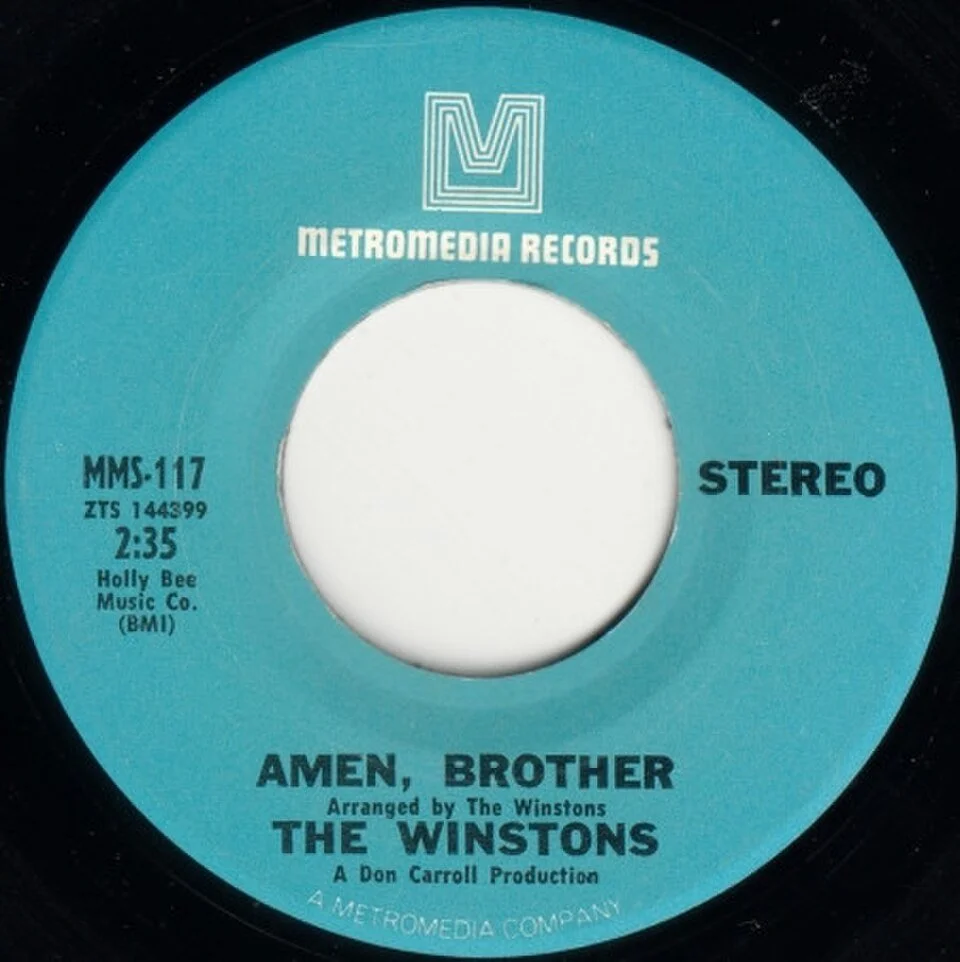
In 1969, Gregory Coleman played a 7 second drum break that would eventually be the most heard drum sound in the world. The track he played on, ‘Amen, Brother’ by American soul group The Winstons, has as of today been sampled on over 7000 tracks, making it the undisputed most sampled track in history (5). From hip-hop to jungle, drum and bass to rave music, a wide span of genres utilised the drum beat and made it their own, such as a rap loop on Salt-N-Pepa’s ‘I Desire’ and NWA’s ‘Straight Outta Compton’ or chopped up on jungle tracks like Lennie De Ice’s ‘We are I.E.’ (6).

The beat, coined the ‘Amen Break’ most notably re-emerged on a 1986 compilation named Ultimate Beats and Breaks, while also appearing on other sampling collections. With the 80s boom of hip-hop and electronic music, record companies created these compilations including songs with beats that were good to scratch and mix. These companies, however, were effectively selling the ‘Amen Break’ as their own copyrighted material, and by the 2000s multiple copyrights existed for the track. The lack of strict copyright laws at the time meant that any original artist was unlikely to see a reward for their work. On the other side of the coin, this flexibility enabled the ‘Amen Break’ to inspire thousands of minutes of music and new genres, far beyond those original 7 seconds.

Hence, while the free use of the ‘Amen Break’ would contribute to the development of multiple music scenes, Coleman would see no royalties or reward in his lifetime, dying homeless and penniless on February 5th, 2006. In 2015, a crowdfund raised £24,000 to give to The Winstons’ frontman Richard Spencer, as a rightful reward for their track’s success (7).

In the modern day, have we not returned to a similar issue? Just as music copyright law didn’t keep up for the likes of Coleman in the age of sampling, we’ve seen the law once again lag behind the booming growth of AI music software. However, could intense scepticism around AI as well as copyright crackdowns lead to regulatory control that inhibits potential creativity?

Both Suno and Udio, the two most popular AI music generators, have been sued by Universal Music Group (UMG) and Sony Music Entertainment amongst multiple other entities in the past 2 years for copyright infringement. The original claims state that their AI models had been trained on copyrighted music without authorization, which after 2 years of discovery has led to both UMG and Sony adding over 60,000 recordings to their lawsuits against Suno (8). Furthermore, despite having an initial bid denied, Sony have once again sued Udio asserting over 30,000 recordings have been illegally copied (9). The result of these cases is likely to shape the future for creative AI models, deciding whether training these models on data sets including copyrighted recordings without license is deemed fair use or not.

In opposition to the labels, the AI companies point to recent rulings such as Bartz v. Anthropic, where the use of books for AI training was ruled as fair use, as well as Kadrey v. Meta Platforms where a similar ruling was found. In the Anthropic case, the judge deemed that the AI’s output was not similar enough to the source books, calling the use “spectacularly transformative” (8). However, in the cases with Suno and Udio, the argument remains as to what extent the music created is too similar to the recordings used to train them.

There may be answers arriving soon, especially as previous claimant Warner Music Group (WMG) settled and launched a joint venture with Suno to create data sets including licensed tracks for their AI model (10). UMG have similarly started to settle with Suno and are in the process of licensing tracks for their data sets also. Perhaps then, a suitable compromise will be met that enables these AI music programs to operate legally. However, if artists do not approve of their music being used for these models, they’ll be left with less recordings to train from and will likely be less effective tools. But if doing so protects these songs from being copied an infringing way, then it is just as important to protect artists and their work – protected so that the only time their work is copied, they’ll be rewarded accordingly.

For those artists who are using these AI programs as either inspiration for their work (11) or as tools for their creative process (12), a future where these programs are both law and label approved could be a positive for enabling more streamlined creativity for musicians wanting to use these tools. Although, a further issue then emerges regarding transparency about AI use, with listeners wanting to know the extent to which their music is AI generated (13). Then with copyright, if artists do use these AI music-making platforms, to what extent is their music their own, or is owned by the companies behind these softwares.

With this, perhaps we should think back to the ‘Amen Break’, how it led to the creation of new songs and genres inspiring countless musicians, but also how its original creators saw none of the success land in their own hands. But what if the story wasn’t so simple. What if Coleman didn’t even own the drum break he played. The song ‘Amen, Brother’, is in fact an up-tempo adaptation of ‘Amen’, a gospel tune by Jester Harrison (14). In this case, if every song is inspired, copied, or updated even before these AI programs existed, then is the process of transforming the old into the new not just the process of human creativity? What is being judged then, is truly how similar the AI process of creativity is to the human one. On the one hand, we must encourage this creativity and allow for new music to be made. On the other, we must protect the music and artists that have already been.

Theo Grange, July 2026

1: https://aristake.com/ai-tools-musicians-study/

2: https://www.rollingstone.com/music/music-features/timbaland-new-artist-tata-ai-1235356185/

3: https://www.theguardian.com/music/2021/dec/07/he-touched-a-nerve-how-the-first-piece-of-ai-music-was-born-in-1956

4: https://newsroom-deezer.com/2025/11/deezer-ipsos-survey-ai-music/

5: https://www.whosampled.com/The-Winstons/Amen,-Brother/

6: https://www.youtube.com/watch?v=wusSmIV-FE8 https://www.youtube.com/watch?v=TMZi25Pq3T8 https://www.youtube.com/watch?v=rtokNN1HZ9A

7: https://www.vice.com/en/article/amen-breakbeat-fundraiser/

8: https://www.musicbusinessworldwide.com/why-a-fight-over-61000-recordings-could-shape-the-future-of-ai-music-licensing/

9: https://www.musicbusinessworldwide.com/sony-music-files-new-lawsuit-against-ai-platform-udio-asserting-over-30000-sound-recordings-a-judge-barred-it-from-adding-to-its-original-case/

10: https://www.bbc.co.uk/news/articles/cjdrl7lr039o

11: https://www.hollywoodreporter.com/music/music-news/how-many-musicians-use-ai-1236616294/

12: https://aristake.com/ai-tools-musicians-study/

13: https://www.smithsonianmag.com/smart-news/ai-music-is-already-here-to-protect-human-artists-the-record-industry-proposes-labels-for-it-like-those-for-explicit-lyrics-180989128/

14: https://www.ethanhein.com/wp/2011/the-amen-break/

Emotion Recognition AI under the GDPR and AI Act

Emotion Recognition Systems (“ERS”) are AI systems designed to identify or infer a person’s emotions or intentions from biometric signals. Depending on the system, those signals may include facial movements, or physiological indicators such as heart rate. The systems have been marketed for uses ranging from healthcare to recruitment, employee monitoring and education.

However, these uses have prompted significant scientific, legal and ethical concerns. The main issue is that an observable expression does not necessarily reveal a person’s internal emotional state. When uncertain inferences are used to assess a person, the consequences may extend beyond inaccuracy to discrimination, intrusive monitoring and interference with individual autonomy.

In Europe, ERS are governed by the General Data Protection Regulation (GDPR) which regulates the processing of personal data used and generated by these systems. Also, the EU Artificial Intelligence Act (AI Act) which introduces more targeted rules, prohibitions, transparency duties and requirements for high-risk systems. Together, the regimes impose significant constraints, but important questions remain about their scope and practical application.

In July 2025, the Dutch Data Protection Authority described AI-based emotion recognition as “questionable and risky”. It highlighted the absence of scientific consensus, the possibility of inaccurate or discriminatory conclusions and the intrusive nature of monitoring faces. The regulator was particularly concerned about uses that could affect decisions in employment or education. Its intervention reflects a broader shift from treating emotion recognition as an experimental analytics tool towards viewing it as a technology capable of materially affecting privacy, equality and individual autonomy.

The GDPR

The GDPR does not expressly refer to emotion data, but its definition of personal data is sufficiently broad to capture many ERS inputs and outputs. Article 4(1) covers any information relating to an identified or identifiable person. In Nowak v Data Protection Commissioner, the Court of Justice of the European Union confirmed that subjective information, including assessments and, may constitute personal data where it relates to an individual by reason of its content, purpose or effect.

The treatment of biometric and health-related inputs requires greater care. A facial image or physiological measurement is not automatically special-category data. Under Article 9 GDPR, biometric data receives special protection where it is processed for the purpose of uniquely identifying a person. Physiological information

may constitute health data where it reveals information about an individual’s physical or mental health.

Controllers must identify an Article 6 lawful basis and, where special-category data is involved, a separate Article 9 condition. Consent may be difficult to rely upon in employment or educational settings because of the imbalance of power between the parties. Legitimate interests may also be difficult to establish where monitoring is intrusive, unexpected or capable of influencing significant decisions.

A data protection impact assessment is also likely to be required where ERS involve innovative technology, systematic monitoring or processing that presents a high risk to individuals. The assessment should address not only data security but also the system’s scientific validity, the possibility of discriminatory outcomes, the consequences of incorrect inferences and whether less intrusive alternatives are available.

Article 13 applies where personal data is collected directly from the individual, while Article 14 may apply to derived information that was not obtained directly from them. A controller may therefore need to explain both the collection of the underlying signals and the generation and use of emotional inferences.

Although the GDPR requires information about the purposes, data categories and, in appropriate cases, the logic and consequences of automated decision-making, it does not necessarily give an individual access to a detailed technical explanation of every inference. This creates a practical transparency gap. As a person may be told that their behavioural and biometric data is processed without understand which emotions were attributed and whether the output asserted was accurate.

The AI Act

Article 3(39) of the AI Act defines an emotion recognition system as an AI system intended to identify or infer the emotions or intentions of natural persons based on their biometric data. The definition therefore contains three central elements: there must be an AI system; it must identify or infer emotions or intentions; and it must do so using biometric data.

Article 5(1)(f) prohibits the use of such systems to infer emotions in workplaces and educational institutions, except where the use is intended for medical or safety reasons. It reflects both the disputed reliability of the technology and the unequal power relationships present in those environments. A breach may attract an administrative fine of up to EUR 35 million or 7% of worldwide annual turnover, subject to the Act’s proportionality rules.

Outside prohibited workplace and educational uses, emotion recognition systems are generally listed as high-risk under Annex III. This classification brings requirements relating to risk management, data governance, technical documentation, record-keeping, transparency, human oversight, accuracy, and cybersecurity.

Following the EU’s 2026 AI Omnibus reforms, the high-risk requirements for stand-alone Annex III systems are scheduled to apply from 2 December 2027. This does not, remove the need to prepare gathering performance evidence, redesigning governance processes and negotiating appropriate contractual protections may require substantial lead time.

Article 50(3) requires deployers of emotion recognition systems to inform individuals who are exposed to them. That transparency obligation applies from 2 August 2026 and is not confined to systems classified as high-risk. It should be addressed alongside, rather than treated as a substitute for, the more extensive transparency requirements under the GDPR.

What Businesses Should Do Now

Organisations considering ERS should begin with a detailed assessment of the actual use case rather than the vendor’s label. They should determine whether the system infers an emotion or intention, whether it does so use biometric data, where it will be deployed and whether its output will influence a decision about an individual. In workplace and educational contexts, the starting point should be that emotion inference is prohibited unless a narrowly construed medical or safety exception can be demonstrated.

Due diligence should extend beyond ordinary technical and contractual review. Providers should be required to produce evidence of the system’s scientific basis, testing methodology, demographic performance and known limitations. A data-mapping exercise should identify the signals collected, the inferences generated, the lawful bases relied upon, any Article 9 data and the parties that receive or use the output. Organisations should also establish proportionate retention periods, restrict access and ensure that individuals receive meaningful information about the system’s operation and consequences.

Human oversight must be substantive; reviewers should have the authority and contextual information required to question an output. Emotional inferences should not determine high-impact decisions, including recruitment, disciplinary action or access to services. Without independent supporting evidence and a meaningful opportunity for the affected person to challenge the conclusion.

Contracts should allocate responsibility for regulatory classification, technical documentation, audit rights, performance monitoring, incident management and material changes to the system. Organisations should also establish a process for reviewing the use case as regulatory guidance, scientific evidence and the technology itself evolve.

Conclusion

Emotion recognition occupies an unusually difficult position at the intersection of data protection, AI governance and contested science. The GDPR provides a broad framework for regulating the personal data on which ERS rely, but its conventional concepts of lawful basis, transparency and automated decision-making do not resolve every difficulty created by uncertain emotional inferences. The AI Act responds more directly by prohibiting certain uses, classifying other systems as high-risk and requiring individuals to be informed when they are exposed to the technology.

The Dutch DPA’s intervention is a clear indication that regulators will not treat emotion recognition as an ordinary analytics feature. For businesses, compliance should therefore begin before procurement and should extend beyond documentation. The central question is whether its use is defensible, necessary and proportionate to the risks it creates. Where an organisation cannot prove the legitimate purpose of the system, it becomes a decision whether to deploy the system at all.

Andrea Motha, July 2026

The Media Act of 2024: Practical Implications for the UK’s Entertainment Industry

The Evolution of Regulations

The UK media landscape has changed dramatically since the Communications Act 2003 with the takeover of digitalisation and on-demand viewing services. UK audiences increasingly choose online streaming services, smart TV’s and digital news outlets over traditional broadcasting services creating increased pressure for the UK media to adapt to technological innovation and customer expectations. The Media Act 2024 represents one of the biggest reforms in broadcasting legislation in the last two decades, working to modernise traditional framework while supporting the increasing prominence of UK Public Service Broadcasters.

For existing participants in the entertainment industry, these reforms extend beyond traditional change and have the potential to influence commercial strategy and contractual relations. As this Act continues to evolve, those operating within the UK’s media sector should consider possible effects on future compliance obligations and costs but also increased commercial opportunities and greater investment. The Media Act 2024 acts not just as a regulatory change but a development that could influence the way entertainment companies create and monetise content in the years ahead.


Modernised Viewing Habits and Content Distribution

Television, streaming and online entertainment are effectively merging as traditional broadcasters no longer compete with only each other. Linear TV now operates in a market dominated by streaming services such as Netflix, Amazon Prime Video and Disney + that prioritise monetised subscriptions and commercial strategy. The Act responds to this shift by updating regulations to ensure the UK media framework reflects modernised viewing habits. One of the most significant changes is the growing accessibility of Public Service Broadcasters’ streaming services. As smart TVs and online platforms become increasingly popular, ensuring UK broadcasters remain easily accessible becomes commercially detrimental. Greater visibility helps broadcasters attract a wider audience, increase the value of their digital services and expand advertising opportunities. For many in the industry, the Act creates a new commercial environment where success is not just measured by high-quality production but also the ability to engage with audiences across an array of platforms. This shift demonstrates the growing importance of digital distribution and investment in content that can compete in an increasingly international marketplace.


The Commercial Impact on Public Service Broadcasters

The Media Act 2024 will commercially impact Public Service Broadcasters, which face ongoing rise in competition from global streaming networks. Services such as BBC iPlayer, Channel 4 streaming, ITVX and more digital platforms are becoming central to the consumption of UK media. The Act’s aim of increasing the accessibility of Public Service Broadcasters is in place to help maintain their relationship with viewers. Larger audiences bring in potential for higher subscriptions and advertising revenue. This factor is largely important when looking into new ways traditional broadcasting services can compete with international streaming companies who are in possession of more financial resources. By supporting these UK broadcasters, the Media Act 2024 could encourage industry broadcasters to invest more confidently creating higher demand for entertainment, shows, films and content produced by UK production companies.

The Media Act 2024 is more than just about improving the commercial impact of the evolving market on broadcasters, it also has the potential to influence how money flows through the entirety of UK media production. An increase in the demand for original content provides wider opportunity for independent production companies and creative professionals who have previously relied on streaming and broadcaster commissions. As competition for viewer attention continues to grow, it is vital for entertainment businesses to continue developing distinctive and original programmes that attract audiences in both domestic and international markets. This creates potential growth across the entire production chain from the writers, directors and actors to the editors and postproduction team.

High-quality UK content has become a valuable commercial asset as successful programmes work to generate additional income through international distribution, licensing agreements and format sales. For production companies, the ability to create content that is accessible and popular across multiple platforms allows for an increase in market value and the opportunity for future investment. The Act aims to have implications beyond broadcasting, operating throughout a commercially connected entertainment eco-system. This is evident through the effects on Channel 4 as a previously commission reliant business that was heavily dependent on its contracts to fund distinctive UK programmes. The Media Act 2024 removed this restriction allowing Channel 4 to operate an in-house studio to produce its own shows.


New Regulations for Global Streaming Services

New regulations also have a massive impact on streaming services such as Netflix, Amazon Prime Video and Disney + which have become major competitors in the UK market. These on-demand services have transformed the expectations of the global market surrounding convenience, viewer habits and content choices. The Act addresses the idea of on-demand services adapting the original regulatory framework to create a consistent environment between traditional broadcasters and digital platforms. For streaming companies, the Act may introduce more responsibilities and operational costs for the business to ensure they are meeting the requirements of new regulations and UK standards.

The Act could provide a commercial advantage for streaming services as compliance to these standards could increase viewer’s confidence and trust in digital entertainment. A more reliable and transparent streaming market may be more attractive to customers as they help support long-term business growth. The Media Act 2024 encourages streaming platforms to consider the importance of the UK as a creative market enticing international companies to invest in original, high-quality production and further attracting higher subscription rates. This increases the opportunity for partnerships between global platforms and British companies looking to expand in the industry, evident in Netflix’s extensive co-production model with UK- based Public Service Broadcasters. Ultimately, larger businesses who can absorb costs and adapt to new regulations will likely succeed within the industry.

Economic Growth

The Media Act 2024 contributes to continued growth of the UK economy with a 9.4% estimated total UK Gross Value Added encouraging further investment in entertainment production. The UK has already established itself as an attractive location for film and television companies due to its skilled workforce, talents and facilities. However, by creating a modern media environment, abiding to new regulations may increase confidence amongst investors looking to develop new projects or collaborate with UK-based companies. Commercial benefits extend beyond broadcasters and streaming platforms, creating opportunities for a wide range of businesses involved in the entertainment industry. The increase in production has the future potential to support employment amongst freelancers and creative professionals while generating income for companies involved in areas such as post-production, marketing and distribution. Additional revenue can further be obtained through international investment.


Conclusion

Despite the possible benefits of the Media Act 2024, entertainment businesses are still at risk of commercial pressures caused by regulatory change. It is possible businesses will need to invest in resources into compliance, technology and adapt business strategy to meet new expectations. For smaller broadcasters and independent companies these additional costs could create financial challenges. This could have significant impacts on a small business in a market where securing investments is already a major priority.

However, the overall success of the Media Act 2024 is more likely to be measured on how effective businesses within the entertainment industry use the opportunity it creates. By enforcing relations between Public Sector Broadcasters and streaming services the Act attempts to support a more competitive and innovative market.

The Media Act 2024 represents significant commercial development for the UK entertainment. Whilst businesses adapt the Act creates opportunities for increased investment, stronger audience engagement and continued growth within the creative sector. Businesses that are able to evolve with changing regulations will likely benefit from an expanding digital landscape.

Evie Harrison, July 2026

AI and the ASA: Regulating the Future of Advertising

Artificial Intelligence (AI) has rapidly become one of the most significant developments in the advertising industry. With the introduction of AI tools capable of producing sophisticated video content using realistic images and generating marketing copy, AI has enabled businesses to produce advertising content at lower costs within quicker times than ever before. Although the presence of new technologies creates exciting opportunities for creativity, it raises important questions about accuracy and consumer protection, as AI systems can generate content that appears realistic but is not always grounded in factual or verifiable information. 

In the UK, the Advertising Standards Authority (ASA) is responsible for regulating advertising, to ensure advertising remains legal and truthful. Whilst AI is transforming the way advertisements are created, the ASA explicitly stated that the technology does not alter the standards expected of the advertisers. Businesses retain responsibility for any claim from the AI-generated advertisement is substantiated and do not mislead the consumers.  

Recent rulings involving AI-powered products with the regulator’s own increasing use of AI to promptly monitor online advertisement demonstrate how advertising is evolving alongside technological innovations. This article examines how ASA is applying established principles to the AI-generated content. It also considers a recent ruling involving an AI-advertising tool. This article also explores what these developments mean for advertisers operating in an increasingly AI-driven marketplace. 

AI in Advertising

One of the most significant challenges posed by Artificial Intelligence in advertising is the increasing realism of content that can be produced.  AI tools are not only capable of generating written promotions, but they can also create highly convincing images and videos that closely resemble product demonstrations. This enhanced realism may make it difficult for consumers to distinguish between authentic and digital footage. This is especially challenging when content is designed to persuade consumers into buying a product as they could be intrigued in a particular part of the product due to its AI-generation.  

This raises concerns when AI is used to imply the capabilities of an object which are not realistic or possible in everyday use. Even subtle improvements can exaggerate the effectiveness which will increase the likelihood that a consumer will purchase the product. Furthermore, in a competitive digital market where impressions can strongly influence a purchasing decision, a slight enhancement will encourage them to buy one product rather than the other. As a result, it could lead to lower sales, reduced production and ultimately leading to a potential business closure. Over time, increasing competition may encourage more businesses to rely on AI-generated promotional content, subsequently increasing the risk of exaggerated advertising claims. Overall, this causes the consumer base to struggle to differentiate between what is real and what is not. 

Consequently, the primary issue is no longer whether AI is being used, but how it shapes the overall impression of an advertisement. This places greater importance on established regulatory principles that focus on consumer perception, rather than the technology used to create the content. 

Case Study (ASA Ruling Against ‘WiggyDog’)

A recent example of the ASA’s approach to AI-generated content in advertisement is its ruling against ‘WiggyDog’, published on 25th March 2026. The case concerned an advertisement which included photorealistic scenes of a robot-dog toy behaving like a real puppy. This paid-for Meta ad, seen in January 2026, featured scenes of a brown and white puppy in different scenarios. Throughout the advert the toy was shown walking around, wagging its tail and responding to voice commands whilst interacting naturally with people. In one scene a girl was shown opening a toy box when the puppy climbed out. Further scenes presented this dog climbing onto a person’s leg and licking someone’s hand and tilting its head. A voice over-stated, “This robotic puppy looks so real it completely fooled my neighbour who is a veterinarian. I’ve been a grandmother for 15 years this is the smartest purchase I've ever made. Last month I got my granddaughter, Emma, this smart, robotic puppy called Wuffy. I still can't believe what this tiny guy can do. This isn't just some stuffed animal. Wuffy has smart technology inside that recognises Emma's voice and responds to her. He sits on command, barks when you talk to him, walks around the house, even tilts his head and wags his tail exactly like a real puppy.” The ASA considered that both the explicit claims and the visual presentation of the advert would mislead the average consumer to believe that the toy displays a high degree of realism and would function in a manner comparable to a living dog. However, when challenged, the advertisers were unable to provide evidence demonstrating that the toy could perform as it was portrayed in the advert. Therefore, the ASA concluded that this advertisement was exaggerating the product’s performance to increase the products sales. Moreover, this is a breach of the CAP code (edition 12) 3.1/3.7/3.11, which relate to misleading and substantiated product advertisement. Hence, the complaint was upheld, and the advertiser was instructed not to use the advert again in its existing form. Overall, this highlighted that advertisers should not use AI-generated content to enhance a product’s capabilities. 

The ASA’s decision in the WiggyDog case demonstrates its continued focus on the overall impression created by an advertisement, rather than the specific technology used to help produce it. Although the advert relied on highly realistic and potentially AI-generated visuals, the regulators were more concerned with how the product is perceived by the consumer. In this case, the imagery suggested that the robotic toy could replicate the behaviour and appearance of a living dog in a way that exceeds its actual capabilities. Thus, ASA treated the advert as misleading, not because of the use of AI, but because of the risk of giving the consumers an exaggerated expectation of the product’s performance. This reinforces the principle that all representations of the product must be supported by adequate evidence regardless of how it was produced. 

This ruling has wider implications for advertisers becoming more reliant on Artificial Intelligence to generate promotional content. It highlights that the use of advanced technology does not reduce the need to comply with the CAP Code. In addition, advertisers must ensure that any AI-generated content must clearly demonstrate the accurate use and what a consumer can expect from a product. The persuasive nature of AI content means that it can be effective at shaping consumer perceptions, but the advertisers must be aware of the unintentional risk of exaggerating a product’s capabilities. As a result, businesses using AI in their marketing must exercise a high level of scrutiny over how their adverts may be interpreted. This ensures that creative innovation does not come at the expense of clarity and honesty. 

The ASA’s Own Use of AI

While AI is transforming the way advertisers can create marketing content, it is also becoming an increasingly important tool for regulators. The ASA first implemented it in 2023 and processed around one million adverts; from 2024 onwards, the Active Ad Monitoring system has processed 28 million. The technology is used to identify adverts which may have breached the CAP Code by flagging them, which allows the ASA to target investigations more effectively and respond to emerging issues at scale. However, AI is not used to make final decisions only to flag possible breaches. This careful approach demonstrates that AI can be used without the risk of false breaches. Therefore, AI can provide great support for regulatory enforcement while ensuring it still relies on human judgement.       

Conclusion

Artificial Intelligence is reshaping the advertising industry by offering businesses new ways to create cost-effective marketing content. Although, as shown by the WiggyDog ruling, AI can also mislead consumers into purchasing products that do not match their expectations. Rather than introducing a completely new regulatory framework, the ASA has shown that the already existing principles are completely capable of regulating advertising with the increasing use of high technology. In addition, ASA have proved that their own adoption of AI has supported the regulation. As AI continues to become more sophisticated advertisers will need to balance their creativity with compliance to not breach the CAP Code to ensure that the enhancements made don’t betray the consumer's trust. 

Taylor-Jon Bethell, July 2026

The Legal Landscape of Holographic Music Shows: Is This the Real Life or Just Fantasy?

‘Welcome to Whitney Houston, very much live!’ - This is how the Whitney Houston hologram introduced herself at her posthumous hologram tour in 2020. Just two years ago, Drake left fans stunned as he performed beside a hologram of his younger self on the ‘It’s All a Blue Tour’. From Tupac’s holographic performance at Coachella to ABBA’s CGI concert, it’s clear that the technological landscape of live music shows is ‘Never Gonna Give You Up’ when it comes to evolving. Unlike some US states, there isn’t a codified personality right in the UK. This means our legal system is often forced to stretch older concepts to protect artists' rights.

Passing off

Instead, our courts generally use the tort law approach called ‘passing off’. Originally used to protect the IP rights of individuals where another person seeks to exploit a similarity between their goods and services, passing off can provide protection for celebrities' images or names from unauthorized use.

Three elements need to be satisfied to prove passing off:

1.      Goodwill (Hunting?)

The claimant's goods or services must possess goodwill or a reputation in the minds of the public, which is associated with their name, image, or other distinguishing features. In the context of a music artist, this requires demonstrating that their name, voice, performance style, or overall persona has established an attractive force which brings in custom, enduring even posthumously. Evidence to prove this often includes substantial album sales, successful past tours, streaming figures, merchandise sales, and continued cultural relevance. Take, for example, Cristiano Ronaldo. His success in trademarking his iconic ‘Siiuuu’ celebration for commercial purposes perfectly illustrates how a distinctive act can acquire significant goodwill and become a protected brand asset. But hunting for this level of goodwill, particularly for individuals who lack a well-established commercial presence, presents a significant challenge, as the reputation must be sufficiently widespread and distinctive to avoid confusion amongst consumers.

2.      Misrepresentation: The Great Pretender

The claimant must demonstrate that there has been a misrepresentation made by the defendant to the public, which may be intentional or unintentional. The core principle is that the defendant has deceived the public into believing their goods or services are associated with, or endorsed by, the claimant. Staging a Whitney Houston hologram concert without authorization from her estate would clearly constitute a misrepresentation, as it implies an official endorsement where none exists.

However, the Amy Winehouse hologram tour, planned by Base Hologram in 2018 with explicit authorization from her estate via her father, Mitch Winehouse, highlights the limitations of the misrepresentation element, despite the controversies that led to its indefinite postponement. While Amy’s ex-husband, Blake Fielder-Civil, called the tour ‘completely misleading’ because it ‘can’t have the same interaction to Amy,’ and a significant portion of fan backlash centred on perceived exploitation of her image for profit, these concerns do not equate to legal misrepresentation for passing off. This is because passing off is narrowly focused on commercial deception regarding the source or endorsement of goods and services, rather than broader ethical or artistic concerns. As the tour was authorised by Amy’s estate, there was no deception about the origin of the show, even if the public felt ‘deceived’ by the premise of a hologram depicting a ‘real’ Amy Winehouse concert. It seems some fans just wanted to tell the hologram, 'You know I'm no good... at being the real Amy!'

3.      Damage: A ‘Hard Day’s Night’ for Your Reputation

The final element is that the claimant must show that the misrepresentation caused or is likely to cause damage to their goodwill. This can be shown through loss of sales or damaged reputation. For example, the US rock band Pearl Jam alleged that the UK tribute band Pearl Jamm created confusion for Pearl Jam’s fans which would dilute the US band by benefiting from the goodwill of the original Pearl Jam without authorisation. Pearl Jamm ultimately changed their name to Legal Jam to avoid litigation, understanding that fighting on could mean that their legal costs would soon be ‘Livin’ on a Prayer’.

Can passing off stretch to cover an unauthorized posthumous hologram concert? While an artist’s goodwill can certainly endure beyond their final bow, applying this old-school legal track to cutting-edge digital resurrections is where the challenge truly hits. Proving quantifiable damage to enduring goodwill from a digital performance can be tricky if the estate isn't actively exploiting the likeness in similar ways. Can damage be done to an artist’s goodwill if they are no longer alive? The law hasn’t reached a clear conclusion yet. Therefore, while theoretically possible, passing off often remains a legal ‘stretch’ rather than a clear-cut solution for these new-age digital encores.

Personality rights in the US: Where the American Dream Extends to Your Stardom

While not recognized on a federal level, some states in the US offer a more direct form of protection through the Right of Publicity, considered as a type of personality rights, in either statute law or common law. When it comes to bringing stars back to life, it should be noted that approximately 20-25 states recognize a post-mortem right to publicity.

A significant recent development was the bill signed by Governor Andrew Cuomo in New York, which came into effect on May 29, 2021. This was particularly impactful because, prior to this law, New York, despite being a major entertainment hub and an ‘Empire State of Mind’, did not recognize a post-mortem right of publicity at all. The new bill protects the rights of those who have commercial value at the time of their death, if they were domiciled in New York, and extends 40 years after the 'deceased performer’s' death. These rights are defined as the protection of the individual’s ‘name, voice, signature, photograph or likeness’ against unwanted and unauthorized commercial exploitation and digital replicas. This would potentially include any technological advances ranging from holograms to the use of CGI.

For a globally recognized illustration of how publicity rights apply, consider the Michael Jackson performance at the 2014 Billboard Music Awards, which took place in California, a state with robust post-mortem publicity rights. With the use of a digital projection called Pepper’s Ghost illusion (commonly referred to as a hologram), the King of Pop appeared to perform his song ‘Slave to the Rhythm’ posthumously on stage. This groundbreaking appearance was explicitly authorized and overseen by Michael Jackson's estate. The estate's decision to license his likeness and performance for this commercial event was a direct exercise of their inherited post-mortem Right of Publicity. If such a performance were to be staged without the estate's explicit permission, the estate would have a clear and direct cause of action. This provides a much more straightforward legal challenge than relying solely on common law principles like passing off, as it directly protects the commercial value of his iconic identity. In the US, when it comes to a star's image, they truly mean business – no ‘Smooth Criminals’ getting away with unauthorized use!

Potential Solutions for UK Law: Striking a New Chord for Hologram Shows

1.  Getting in Tune: Why the UK needs to get Pitch Perfect on Personality Rights

Right now, protecting a celebrity's image in UK law often feels like trying to conduct a symphony with only one instrument – and that instrument is sometimes a bit off-key. But what if the UK introduced a new, dedicated personality right? That would be the legal 'chart-topper' we've all been waiting for! It would finally provide the full orchestra, simplifying legal action by letting artists and their estates skip the convoluted 'passing off' dance. This direct pathway would be pure harmony for protecting their image, especially when it comes to those crucial posthumous hologram shows.

Yet getting the UK legal system to adopt such a direct right isn't as simple as dropping a new single. Historically, UK law has been a bit of a traditionalist, preferring its tried-and-tested common law approach to privacy and image rights. It has resisted a broad, codified personality right, opting instead for a piecemeal strategy through various existing torts and statutes. Crafting such a sweeping new right also presents a complex challenge, requiring careful legislative drafting to ensure it strikes a delicate balance between safeguarding individual rights and upholding fundamental principles like freedom of expression and the right to parody.  Surely no one wants to accidentally silence a comedian's spot-on Boris Johnson impression, complete with the dishevelled blonde mop, just to protect a celebrity's digital clone.

2. From Vinyl to Virtual: Remixing Existing IP law for the Hologram Age

If a shiny new personality right is still stuck in legal production, the UK could always try giving its existing IP discography a serious remix. This approach involves adapting and extending current IP laws to better cover the nuances of digital likenesses and posthumous performances. The Copyright, Designs and Patents Act 1988 (CDPA) obviously wasn't drafted with digital resurrections in mind! While it graciously protects elements like original music recordings that might be part of a hologram, it's not quite ready for the main event – the resurrected star themselves. 

So, the bigger question for ‘remixing’ the CDPA is how it might specifically protect the likeness or persona of a deceased artist when that likeness is part of a newly generated performance, not just a recording of an old one. Parliament could start hitting refresh on some new definitions and interpretations within the CDPA. For instance, new statutory provisions could explicitly define a 'digital likeness' or 'AI-generated performance' of a deceased artist as a specific type of protected work. This would directly recognize and protect up-and-coming new digital forms such as holograms. The challenge, of course, is that even with such an upgrade, copyright inherently protects the expression of a work, not the underlying identity or persona of the person themselves. It's about owning the song, not the singer's face, making it a clever, but perhaps not entirely comprehensive, remix – a bit like putting a fresh beat on an old track, but it's still not a brand-new single.

Next up on our legal remix album are Performer's Rights, also found tucked away in the CDPA. These rights currently give performers control over the recording and exploitation of their live performances. However, just like a classic album, these rights generally end when the performer passes away, or they don't quite cover someone creating a brand-new digital doppelgänger which mimics their Moonwalk.

To truly give the digital encore its due, these rights would need a serious upgrade. Parliament could extend Performer's Rights to explicitly cover unauthorized digital reproductions or AI-generated ‘performances’ that mimic a deceased artist, giving their estates control over these stage appearances. More critically, these rights would need to be extended posthumously, ensuring that the artist's legacy isn't just a cheap cover version played without consent.

The Future is Holographic: Is UK law Ready to Rumble?

Having taken a deep dive into the legal concert hall, it's evident that the UK's current IP discography isn't quite ready for the holographic age. Its existing legal instruments – like the often-strained Passing Off and the classic CDPA – feel less like a protective symphony and more like a kazoo trying to back a rock concert. This leaves artists and their estates shockingly vulnerable when their digital selves rise for a posthumous encore. Across the Atlantic, the US legal system is seemingly hitting all the high notes with its robust publicity rights, making the UK's reliance on old-school legal mixtapes look out-dated. We've explored two potential paths for the UK to finally hit the right notes: either by bringing in a brand-new, dedicated Personality Right – the ultimate legal chart-topper – or by giving its existing IP laws a serious remix, updating Copyright and Performer's Rights for the digital age.

But this isn't just about ensuring a deceased pop star's hologram gets paid; it's about the entire future of digital identity. Hologram shows are no longer a sci-fi fantasy but a booming segment of the entertainment industry, with more ‘digital resurrections’ undoubtedly waiting in the wings. Beyond the stage, the rapid advancements in AI, deepfakes, and sophisticated digital avatars are posing fundamental questions for traditional intellectual property law globally. Even the K-pop industry has introduced several virtual idol groups which have performed on music shows. These technologies challenge established notions of authorship, ownership, and even personal identity, demanding that legal frameworks evolve at a speed previously unheard of. It's clear that if the UK wants to avoid being left in the legal dark ages, its IP laws must quickly learn to keep pace and brace themselves for future surprises.

Ultimately, for the UK to truly shine on the global stage of digital entertainment, its legal system needs to be able to conduct a full, modern orchestra. It's time to fine-tune the instruments, write new scores where necessary, and ensure that the legacy of every artist, whether performing from beyond the grave or creating groundbreaking digital art, is justly protected. Otherwise, the UK risks its legal system being out of sync with the times, while the holograms go on serenading the crowds without proper legal protection for its biggest stars.

Michelle Chung, June 2025

3D CGI CONCERTS – Who has the rights to the Digital Dead?

New technology has evolved to the point where the entertainment world has welcomed a strange new type of performance: one that the artist does not even need to be present for. From ABBA Voyage in London to resurrecting the dead, such as Tupac Shakur’s digital appearance at Coachella (2012), artists have been ‘performing’ without the need to physically be there. While undeniably impressive, these concerts cause some significant legal and ethical concerns: who actually owns the rights to the deceased artist’s image? And who, if anyone, has the right to ‘resurrect’ them?

Despite the common misconception that these apparitions are ‘holograms’, the technology behind them is in fact a mix of CGI (computer-generated imagery) and theatre tricks such as pepper’s ghost. There are two approaches to creating these digital ‘avatars’. The direct approach, used, for example, in the ABBA Voyage concert, uses live actors. These actors (or, in the case of ABBA Voyage, the actual members of the band) perform in front of a blue or green screen wearing sensors. Infrared cameras are used to record their performance. Motion capture records their movements and facial expressions (in this case, 160 cameras recorded the members of the band’s performances over a 5 week period). Theatre tricks, such as ‘pepper’s ghost’ from the 19th century helps to enhance the illusion, making it more realistic by projecting images of performance on a screen, creating the appearance of a 3D figure. The indirect approach, however, uses recordings of archival performances and compiles them to create a ‘new’ performance through digital or computer software.

Production companies, such as ILM (the company behind ABBA Voyage) and Dneg (a large, UK-Indian company based in London) are looking into how AI may help this technology evolve, with Dneg acquiring the AI company Metaphysic, merging it with its technology division (Brahma). This, while a huge advancement in technology, poses certain concerns; the technology has already evolved such that one can create the illusion of a person who is not actually there, including those who are deceased. For example, the ‘hologram’ (in reality, a CGI image) of Tupac Shakur at the 2012 Coachella, 16 years after his death in 1996. If AI gets involved, what could be created next? Who has the rights to the image being created?

The legal frameworks in place to protect artists are not clear cut and simple, and vary from country to country (or, indeed, state to state). While the use of their work is more clear, by getting permission from their record label or production company in respect of the master recordings, or the publisher (in respect of the songs), the use of an artist’s image is more complex.

Personality rights refer to the rights to control the use of one’s name, image, likeness and voice to avoid the exploitation of these characteristics in commercial contexts.

These are considered property, so can be passed to the estate or beneficiaries on the death of the artist.

An example of personality rights in action is in Ford v Midler, where Bette Midler refused an offer to use her voice in a Ford commercial. The company hired a singer to mimic her voice and used one of her songs, editing it to fit the advertisement. This was considered unlawful, as Midler had not given her consent for her voice to be used. The jury was in her favor and she was awarded in damages what she would have received for the commercial.

While the US does not have a federal law protecting personality rights, some states recognise rights of publicity, protecting artists against the unauthorised use of their name, image, likeness or voice in commercial contexts.

California’s Celebrities Rights Act (1985) protects the image, voice and likeness of a celebrity for 70 years after their death. This law was recently (as of January 2025) expanded to include ‘digital’ replications of the artists.

New York published a law on 21st May 2021 publishing post-mortem personality rights for ‘deceased performers’ and ‘deceased personalities’.

The artists must be domiciled in New York at the time of their death.

‘Deceased personalities’ are given traditional rights of publicity to protect them from the commercial use of their name, image and likeness for commercial purposes.

‘Deceased performers’ under this law are given more specific protection against the unauthorised use of ‘digital replicas’ replicating their likeness and work, where the intention is to deceive the public into thinking that the artist is present.

While this may be a step in the correct direction, is it enough?

In most cases, the public would be aware that the artist is deceased. Does that make it ethical to exploit them, using their image without their explicit consent, after their death?

In the UK, the law offers even less protection from these issues.

Personality rights are not recognised, an individual must rely on existing legal frameworks.

For example, passing off, protecting against false endorsements. The estate would need to prove that the artist had commercial ‘goodwill’, that the intention of someone using their image was to deceive the public and that damage occurred as a result.

Copyright laws state that permission would be needed from whoever owns the rights to the artist’s work to use it in a performance. While this may be clear and simple, the emergence of AI technology complicates it: if the voice and style of an artist is used to generate a new performance by AI (artificial intelligence) is that considered unlawful?

Trademark may help to clarify this issue: if an artist has trademarked their name or image, use could be considered an infringement. However, this only applies where there is a trademark, which many artists may not have.

Data protection may offer strong protection against the use of someone’s image, however, would not apply to deceased artists. This means that estates would not have much protection under GDPR for the rights of the artists.

While there are conversations about making changes to the law with the emergence of AI and other technology, as of yet the legal concerns are unclear.

If they were to be clarified, ethical issues would still remain. Who can actually consent for a deceased performer? Is it a tribute or exploitation? Where is the line, and should it have been drawn already?

In conclusion, technology is rapidly advancing and the law has yet to catch up. Without formal post-humous personality rights, estates have little protection. In the UK, they’re forced to rely on existing passing off, copyright or trademark laws which were not prepared to deal with digital forms. While some states in the US protect artists to a certain extent, there are no federal laws protecting artists or their estates from these computer generated resurrections.

This remains a complex legal and ethical question, and as technology continues to advance, the legal system must too.

by AMALIA PAUL

New Media Law

July 2025

For more information, please contact:

Ian Penman, ian@newmedia.law, +44(0)7765 244 111

National Law Journal, 2025. A New Year Brings New Restrictions Relating to AI and California Performers. National Law Journal. [online] Available at: https://www.law.com/nationallawjournal/2025/01/01/a-new-year-brings-new-restrictions-relating-to-ai-and-california-performers/ [Accessed 4 Jul. 2025]

California Civil Code § 3344.1 (1985). Use of Deceased Personality’s Name, Voice, Signature, Photograph, or Likeness. [online] California Legislative Information. Available at: https://leginfo.legislature.ca.gov/faces/codes_displaySection.xhtml?sectionNum=3344.1.&lawCode=CIV[Accessed 4 Jul. 2025]

New York Civil Rights Law § 50-f (2021). Right of Publicity for Deceased Performers and Personalities. [online] Available at: https://www.nysenate.gov/legislation/laws/CVP/50-F [Accessed 4 Jul. 2025]